

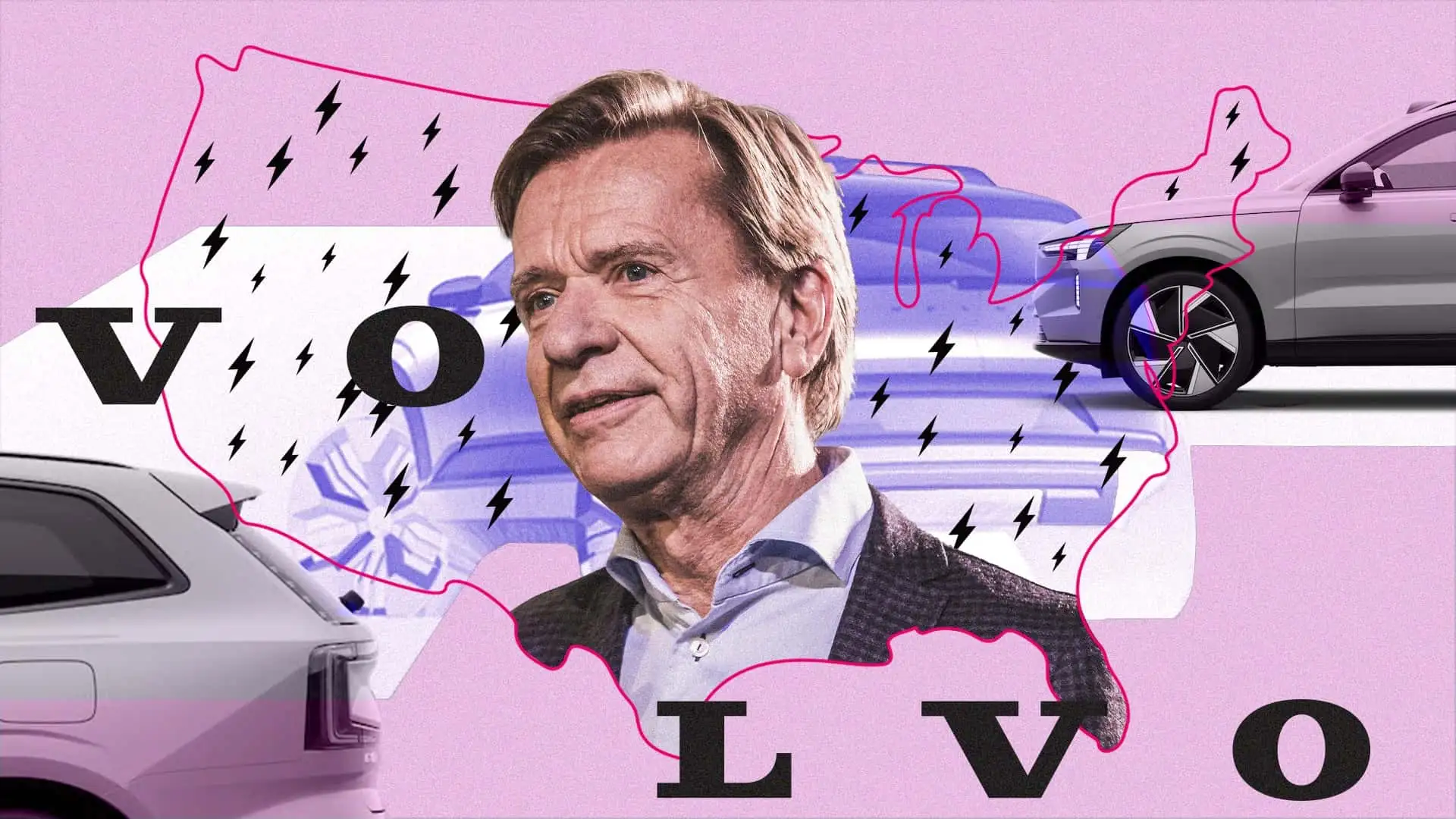
Volvo’s chief executive believes electric vehicles should be thriving in the United States, not struggling for acceptance. Speaking during the debut of the new Volvo EX60, CEO Håkan Samuelsson said he finds American skepticism toward electric vehicles puzzling, especially given how well the country’s living patterns align with home charging.
According to Samuelsson, the suburban lifestyle common across much of the United States offers a natural advantage. Many Americans live in single-family homes with private driveways and garages, making overnight charging simple and convenient. In his view, this makes electric vehicles an easier transition for Americans than for many Europeans.
“I would say the U.S. is a perfect market for electric cars,” Samuelsson said, pointing to multi-car households and private garages. While Europe has moved faster on electrification, he questioned why American consumers remain hesitant despite clear practical benefits.
Electric Vehicles and the Home Charging Advantage
Samuelsson’s argument rests on basic housing data. Most Americans live in detached homes, while a significant share of European residents live in apartments or shared buildings. In the European Union, nearly half of the population resides in apartments, often relying on street parking.
This difference matters because electric vehicles are easiest to own when drivers can charge at home. Apartment dwellers without assigned parking face higher barriers, which has forced European governments to invest heavily in public charging networks. Curbside charging, shared garages, and municipal stations have become essential across many European cities.
In contrast, American suburban development already supports home charging. A dedicated parking space with direct access to power reduces reliance on public chargers and eliminates many daily inconveniences. From a purely logistical standpoint, Samuelsson argues, the U.S. has a built-in advantage.
Why Europe Moved Faster on EV Adoption
Despite these challenges, Europe has embraced electric vehicles more aggressively. One reason is political consistency around climate policy. Emissions standards are stricter, and climate change is far less politically divisive than it is in the United States.
European governments have also committed substantial funding to fast-charging infrastructure. While some ambitious targets have been softened, the European Union still aims for a largely carbon-free vehicle fleet by 2035. This long-term certainty has encouraged automakers and consumers alike to commit to electrification.
As a result, European drivers have adapted to public charging as a normal part of daily life. Governments and cities have treated charging access as essential infrastructure, similar to fuel stations or public transport.
Electric Vehicles Face Policy Headwinds in the U.S.
The situation in the United States looks very different. Many automakers are redirecting investments back toward gasoline-powered vehicles. At the same time, regulatory standards that once pushed lower emissions have been weakened or removed.
Incentives designed to accelerate electric vehicle adoption have also been rolled back. This shift has fueled concerns that the U.S. could fall behind Europe in the transition to cleaner transportation. Some analysts argue the policy retreat sends mixed signals to both consumers and manufacturers.
Samuelsson, however, does not believe policy alone will determine the outcome. He suggests the current skepticism reflects temporary conditions rather than long-term resistance. In his view, incentives can speed adoption, but they do not ultimately drive it.
Read Also
Acura RSX Electric Revival
Skoda Epiq Electric SUV
Consumer Experience May Decide the EV Transition
Samuelsson believes the future of electric vehicles will be shaped by consumer behavior rather than government support. He argues that once drivers switch to electric, they rarely return to internal combustion engines.
Many first-time EV owners report that range anxiety fades quickly. Daily driving habits often fit comfortably within modern battery ranges, and home charging becomes a routine rather than a burden. Over time, charging shifts from a perceived inconvenience to a clear advantage.
Electric vehicles also offer performance benefits that reshape expectations. Drivers frequently cite smoother acceleration, quieter cabins, and reduced maintenance as reasons they prefer electric models. Fewer moving parts mean fewer repairs, while instant torque changes how cars feel on the road.
Charging Becomes an Advantage, Not a Drawback
One of the most common concerns about electric vehicles is charging access. Yet owners often describe charging as a benefit once it becomes part of daily life. Plugging in overnight replaces weekly trips to gas stations, saving time and reducing routine errands.
For suburban households, this advantage is especially pronounced. A vehicle starts each day fully charged, and public charging becomes an occasional backup rather than a necessity. Samuelsson believes this reality will gradually reshape perceptions as more Americans gain firsthand experience.
He also notes that technology improvements continue to reduce barriers. Faster charging speeds, expanding networks, and improved battery efficiency are addressing early concerns that shaped public opinion.
Similar Markets, Different Moments
Despite current differences, Samuelsson argues the U.S. and Europe are more alike than they appear. He believes American skepticism reflects the removal of incentives rather than a fundamental rejection of electric vehicles.
As consumer awareness grows and more models enter the market, he expects attitudes to shift. Automakers like Volvo are betting that real-world experience will outweigh political debate. In that sense, the transition may unfold more slowly, but it may also prove durable.
Electric vehicles, Samuelsson suggests, do not need to be sold on ideology. Once consumers experience the practical benefits, the technology speaks for itself. Over time, familiarity may succeed where incentives and regulations have struggled, reshaping the American market from the driveway outward.

