

Ford is making a bold move into the electric vehicle market with the introduction of the “Universal Electric Vehicle Platform” (UEV). This platform will debut in a $30,000 midsize pickup truck, which Ford plans to produce with a radically simplified manufacturing process. Details on the truck’s appearance and specifications remain limited, but Ford’s approach shows promise for reducing production costs and complexity.
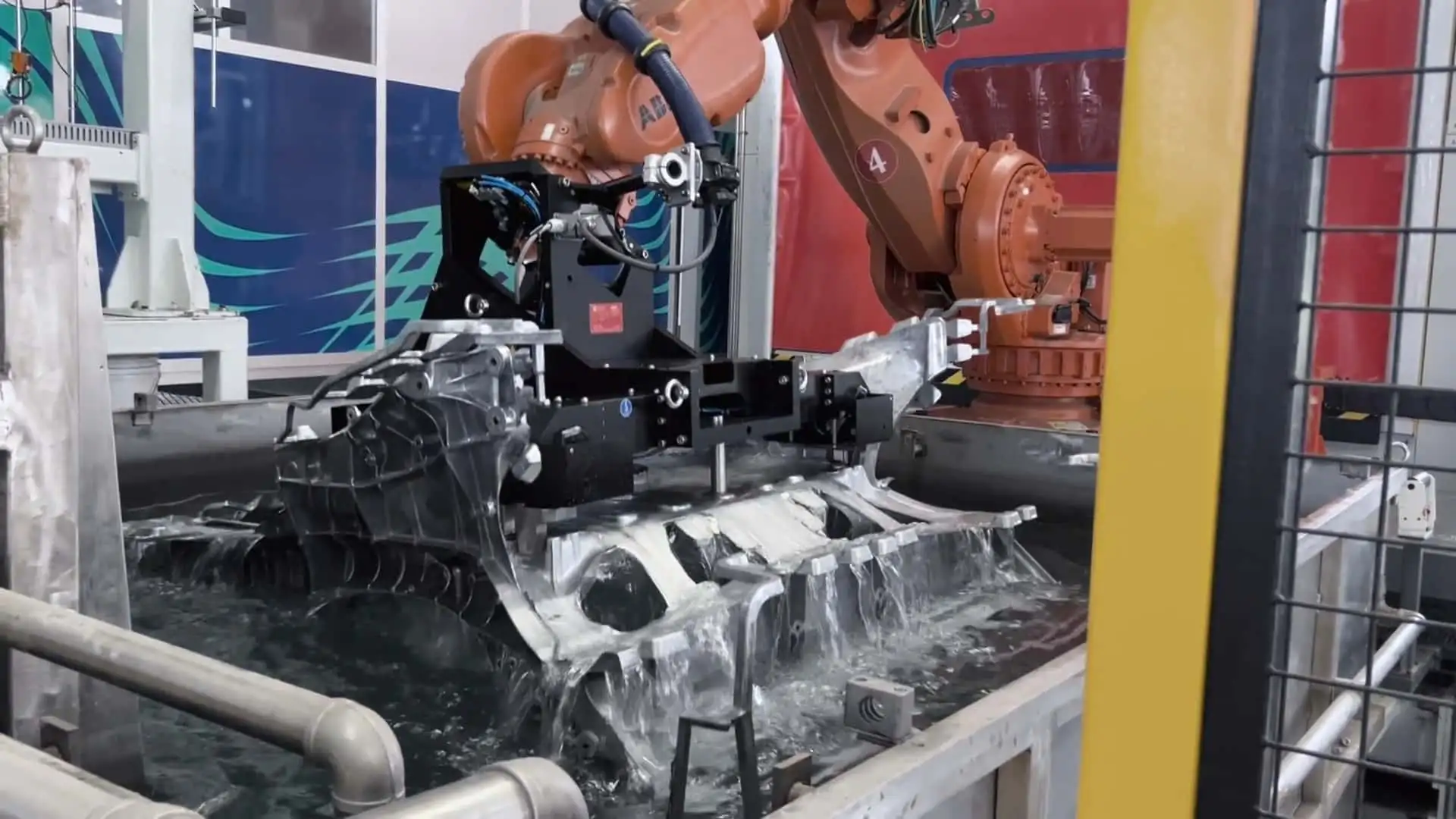
CEO Jim Farley shared an update on the project, revealing how Ford plans to simplify EV manufacturing. A central feature of the UEV platform is the use of large unicastings. These aluminum pieces condense over 146 parts into just two, simplifying the vehicle’s construction. This technique aims to cut down on manufacturing complexity, which could reduce production costs significantly.
Revolutionizing Manufacturing with Large Unicastings
Ford’s use of large unicastings follows Tesla’s lead, which introduced similar “gigacastings” in the Model Y. These large structural parts eliminate the need for many welds and rivets, streamlining assembly. Ford’s approach to unicastings condenses many parts into two, a concept it will debut at the Louisville Assembly Plant. By simplifying production, Ford hopes to lower the costs of manufacturing EVs, making them more affordable for consumers.
The unicastings are crucial to Ford’s “assembly tree” method. This approach divides the EV into three main sections, which are then joined at the end of the assembly line. This streamlined process will further reduce complexity and help the company achieve the cost targets set for the UEV platform, which aims to match the production costs of BYD’s Mexican-made EVs.
Boosting Efficiency and Cutting Costs
Ford has committed to reducing the number of parts used in its upcoming midsize electric pickup by 20%, while cutting fasteners by 25%. These reductions aim to simplify the build while keeping costs low. In addition, Ford is focusing on maximizing aerodynamic efficiency. By minimizing drag, the truck can make the most of its battery energy, increasing both efficiency and range.
Doug Field, Ford’s chief EV, digital, and design officer, emphasized the importance of cutting drag. A reduction of just 0.01 in the drag coefficient can save $25 in battery costs. Ford is targeting the absolute minimum drag to improve vehicle performance and extend driving range. This attention to detail could make a significant impact on the truck’s overall efficiency.
Read Also
Kia Niro Plug-in Hybrid to Skip Model Year in U.S.
Karma Automotive to Launch Kaveya EV with Semi-Solid-State Batteries in 2027
Looking Ahead for EV Manufacturing
Ford’s Universal EV Platform represents a crucial step toward simplifying electric vehicle production. By focusing on large unicastings, reduced part counts, and improved efficiency, Ford hopes to lower the cost of EVs and make them more accessible to consumers. The upcoming midsize pickup will be a key test of the platform’s success, especially since Ford has canceled other EV models like the F-150 Lightning.
The success of the Universal EV Platform could shape the future of electric vehicles. Ford’s strategy emphasizes innovation and efficiency, with the potential to disrupt traditional manufacturing methods. As the UEV platform progresses, Ford will need to meet its ambitious goals to remain competitive in the rapidly evolving EV market.