

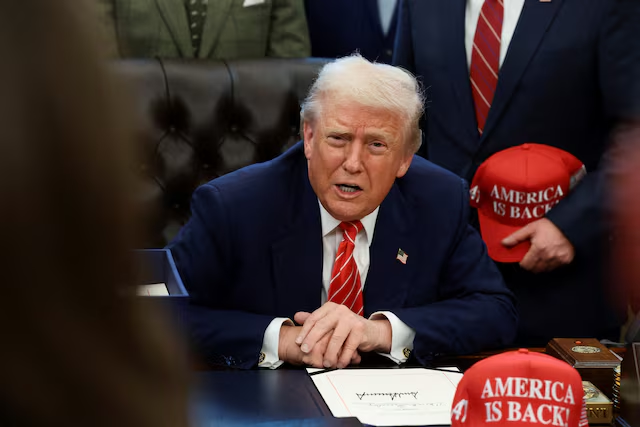
Former U.S. President Donald Trump expressed strong confidence that the Federal Reserve will soon lower benchmark interest rates. In an interview with NBC News, Trump said there was “not much” doubt in his mind about the move. He tied this expectation directly to his preferred choice to lead the central bank: Kevin Warsh.
Trump emphasized that Warsh understands his preference for lower rates. When asked whether Warsh grasped that expectation, Trump replied, “I think he does, but I think he wants to anyway.” He went further, stating clearly that if Warsh had favored raising rates, “he would not have gotten the job. No.”
This comment reinforces Trump’s long-standing view that high interest rates hinder economic growth. Throughout his presidency and beyond, he has consistently pressured the Fed to adopt a more accommodative stance. Now, by endorsing Warsh—a former Fed governor known for market-friendly views—Trump signals a desire for a central bank aligned with his pro-growth agenda.
Moreover, Trump’s remarks reflect a broader political narrative. He links leadership appointments to specific policy outcomes, reinforcing the idea that monetary policy should support fiscal and economic priorities. However, this stance contrasts with the Fed’s traditional emphasis on independence from political influence.
It is important to note that, as of early 2026, Kevin Warsh has not officially become Fed chair. Jerome Powell still serves as chair, and his term extends into 2026. Still, Trump’s public endorsement of Warsh and his comments on Trump Fed interest rates suggest a clear direction for his potential second-term economic strategy.
In addition, financial markets often react to signals from political leaders about future monetary policy. Trump’s confidence in an imminent rate cut could shape investor expectations, even if no formal change is imminent. That said, the Fed bases its decisions on inflation data, employment trends, and economic forecasts—not political preferences.
Ultimately, Trump’s interview highlights a recurring tension between elected officials and central bankers. Presidents may advocate for lower rates to stimulate growth, but the Fed must balance growth with price stability. Whether Warsh—or any future nominee—will prioritize political alignment over institutional independence remains to be seen.
For now, Trump’s message is clear: he believes the era of high rates is ending, and he expects the Fed to act accordingly. His confidence in Trump Fed interest rates moving downward reflects both personal conviction and strategic positioning ahead of the 2026 political landscape.
READ: AT&T Forecasts Strong Profit on Fiber and 5G Expansion